

How Many Large Watersheds Make Up Vermont How Many Large Watersheds Makeup Vermont
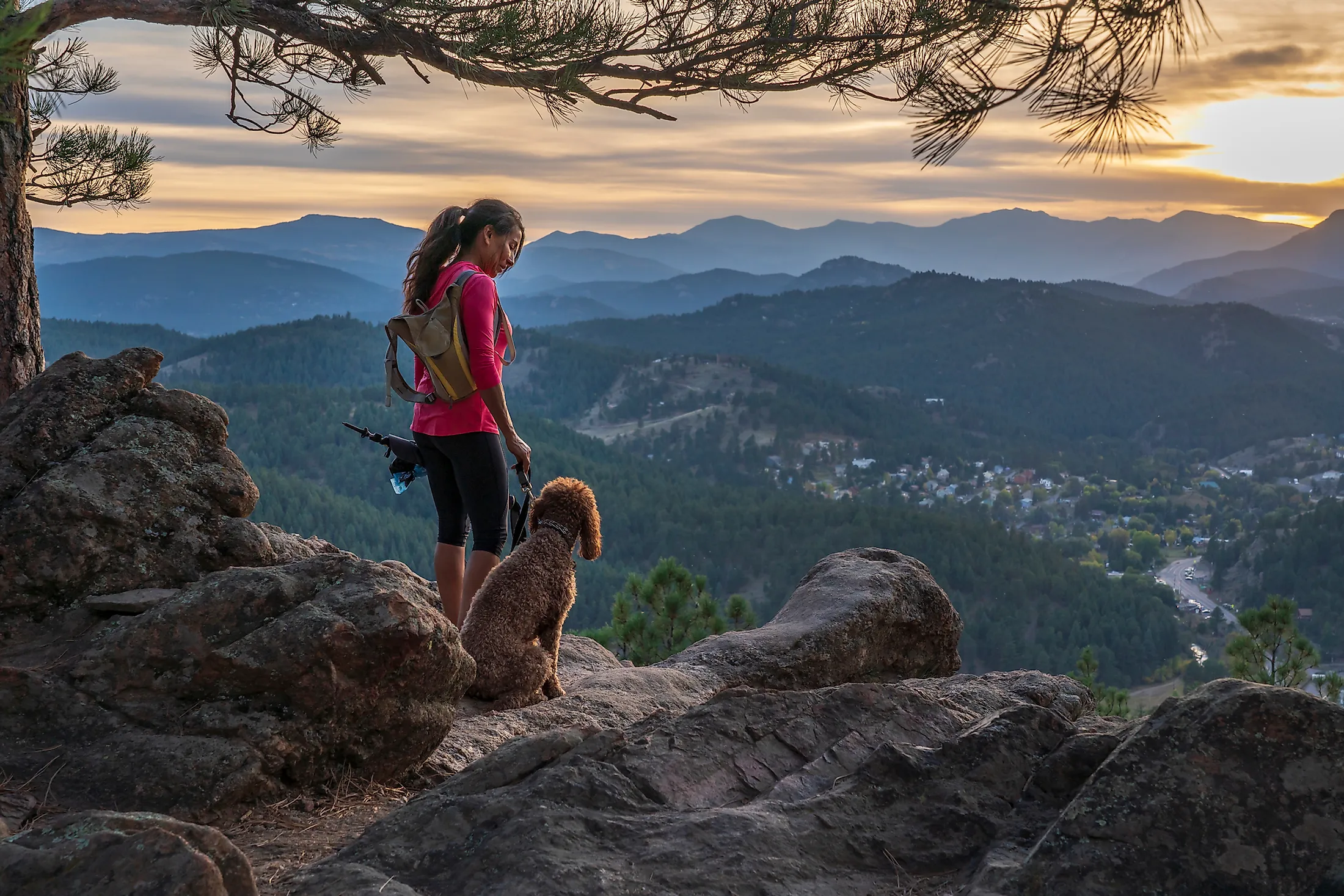
Rocky Mountains
Also referred to as the "Rockies", the Rocky Mountains are a significant mountain range that dominates the western part of the Due north American continent. The Rocky Mountains extend for a distance of about 4,800km and are considered North America's largest mountain organisation. The Rocky Mountains are bordered by the Great Plains on the due east; and by the Canadian Declension Mountains, the Interior Plateau, the Columbia Plateau, and the Basin and Range Province of the United States on the west.
Geography
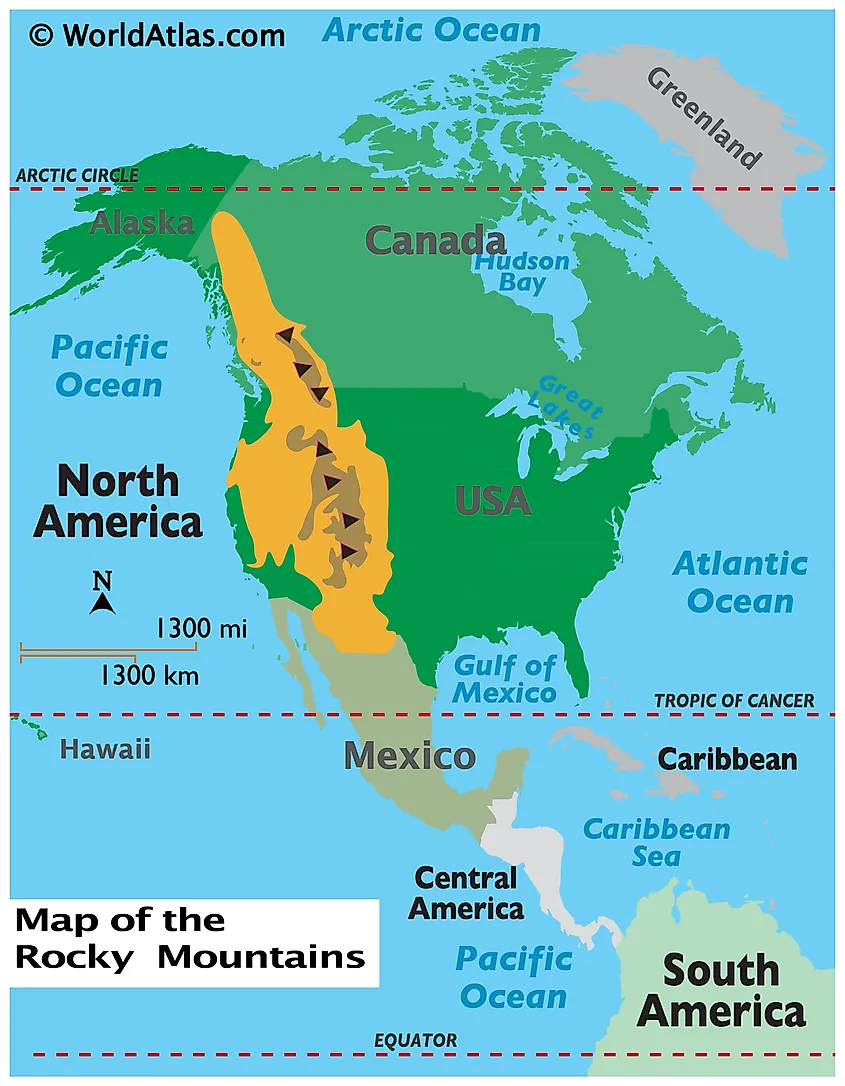
The Rocky Mountains stretch from the northernmost portion of Western Canada to the State of New Mexico in the southwestern United States. The mountain range passes through the United states of america States of Colorado, Idaho, Montana, Utah, Wyoming, and New United mexican states, and the Canadian Provinces of Alberta and British Columbia. The Rocky Mountains contain more than 100 individual mount ranges which are further organized into 4 broad groups. These groups include:
The Canadian Rockies
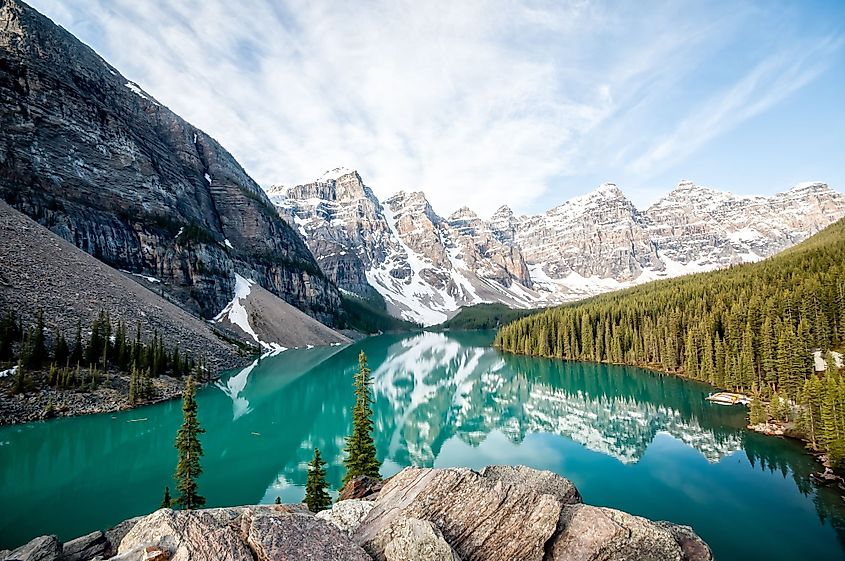
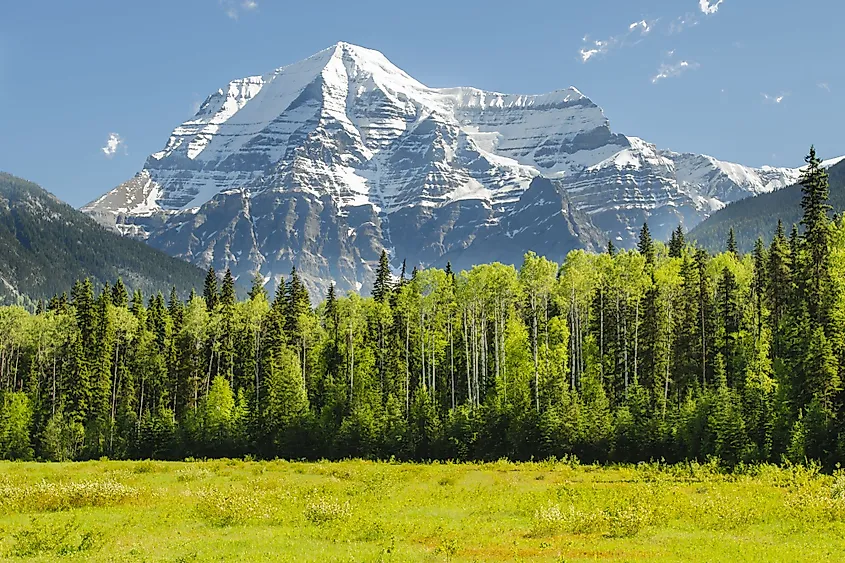
The Canadian Rockies extends southeastwards for nearly 1,600km from the northern role of the Canadian Province of British Columbia and forms a major part of the natural boundary between the Canadian Provinces of Alberta and British Columbia. Located within the Mount Robson Provincial Park in the Canadian Province of British Columbia is Mount Robson, which rises to an acme of 3,954m and is the highest betoken in the Canadian Rockies. The Canadian Rockies are farther divided into three major groups: the Continental Ranges and the Muskwa and the Hart Ranges that are collectively known as the Northern Rockies. The Northern Rockies too include the Lewis and Bitterroot ranges in the western part of the Us State of Montana and the northeastern part of the Usa Country of Idaho. The Rocky Mountain Trench forms the western purlieus of the Canadian Rockies and separates the Columbia Mountains from the front ranges of the Canadian Rockies.
The Center Rockies
The Middle Rockies include the La Sal Mountain Ranges that are located along the boundary between the US States of Utah and Colorado; the Uinta Mountain range of the United states of america States of Utah and Wyoming; and the Teton Mountain Range of the United states of america States of Wyoming and Idaho. The Absaroka Range extends from northwestern Wyoming into Montana and acts every bit a link between the Eye and the Northern Rockies. The Cardinal ranges of the Rockies are characterized past loftier mountain peaks with glacial tops.
The Southern Rockies
The Southern Rockies are found in the U.s. States of Wyoming, New Mexico, Colorado, and Utah. The mountain ranges that form a function of the Southern Rockies include the Front Range and the Wet and the Sangre de Cristo Mountains forth the eastern slopes and the San Juan Mountains, the Sawatch ranges, the Park and Gore ranges on the western slopes. These eastern and western ranges are separated by many loftier basins including the San Luis Valley, the Arkansas River Valley, and the N Park.
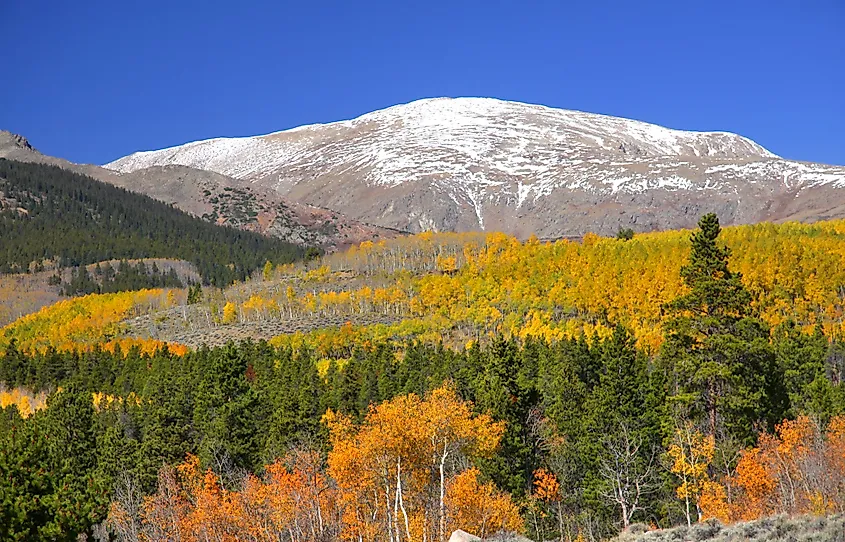
The mount ranges of the Southern Rockies are insufficiently much college than the Northern and Heart Rockies. Located in the Sawatch Mount range in the US State of Colorado is Mountain Elbert, which rises to an meridian of 4,401.2m and is the highest point in Colorado as well as the entire Rocky Mountains.
The Colorado Plateau
The Colorado Plateau Province is a physiographic region of Intermontane Plateaus that is mainly centered on the Iv Corners Region in the southwestern part of the U.s.. Information technology includes parts of the Usa States of Arizona, Colorado, New Mexico, and Utah.
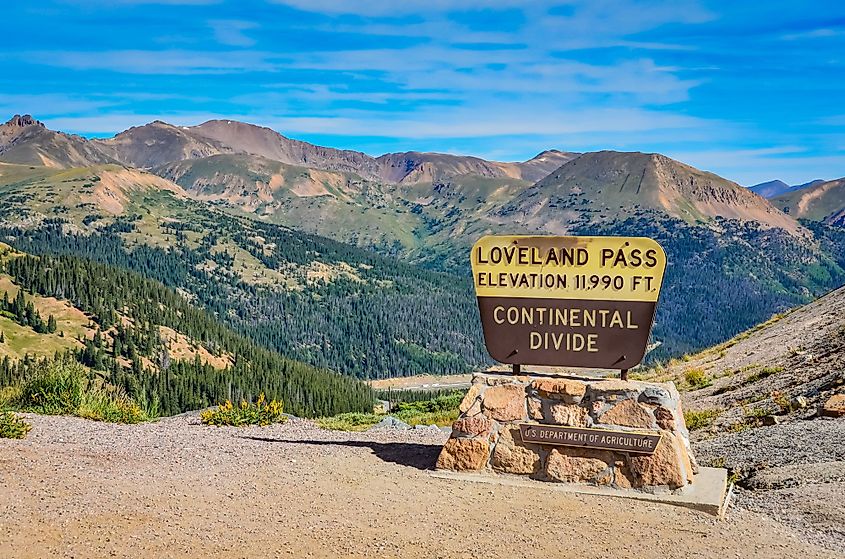
The Rocky Mountains vary in width from less than 100km in the Canadian Rockies to about 600km in the Middle Rockies. Of the100 highest mount peaks ocated in the Rocky Mountains, 78 high peaks are located in Colorado,10 in Wyoming, 6 in New Mexico, 3 in Montana, and one in Utah. The Western Continental Divide runs through the crests of the Rocky Mountains in northwestern Canada and the continental United states. The Continental Separate serves as a hydrological dissever separating the waters that flow into the Pacific Bounding main from the waters that bleed into the Arctic or Atlantic Oceans. Located in the Lewis Range of the Rocky Mountains in the Glacier National Park is the Triple Divide Peak, where water falling on the mountain drains into the Atlantic and the Pacific Oceans every bit well as the Hudson Bay.
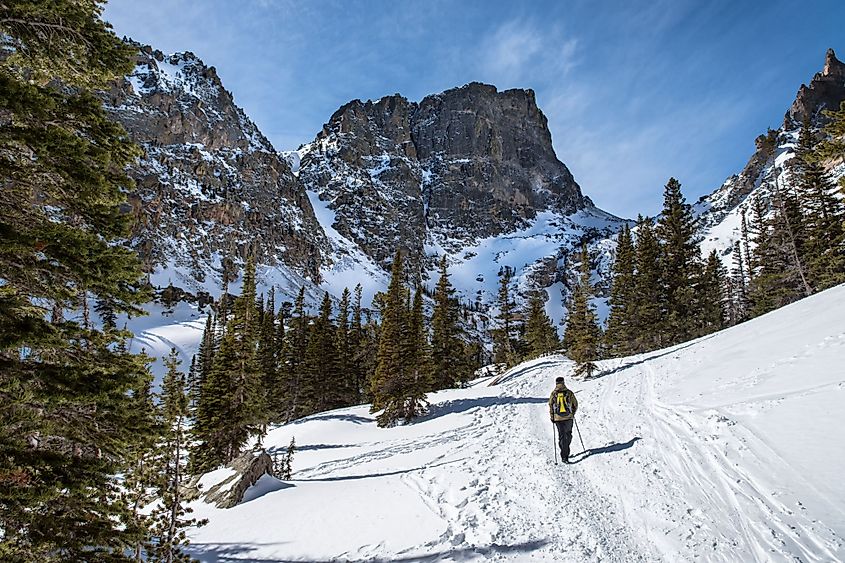
The mountainous landscape of the Rockies is protected by several national parks including the Banff, Jasper, Kootenay, Waterton Lakes, Yoho, Glacier National Park, Yellowstone, Grand Teton National Park, Rocky Mountain National Park, Sawtooth National Recreation Area, etc. The Rockies are also very popular tourist spots and attract visitors from all over the earth. The mountains offer many recreational activities like hiking, mountaineering, camping ground, mountain biking, snowboarding, skiing, angling, etc.
Geology
The Rocky Mountains form the easternmost part of the North American Cordillera and were formed during the Laramide Orogeny between lxxx to 55 million years ago. During this mountain-building menstruation, the ancient Farallon oceanic plate moved underneath the North American Plate at a very low angle. This unusual subduction and potent tectonic activities caused the piling of the crust sheets on top of each other and resulted in the formation of the Rocky Mountains along the western part of the North American continent. Further tectonic activities, erosions, and the glaciers of the Pleistocene and the Holocene Epochs helped in carving out the mountainous landscape and creating the rugged Rocky Mountains. The ice ages as well led to the formation of massive glacial landforms, cirques, and U-shaped valleys.
The 15 Highest Peaks Of The Rocky Mountains
| Rank | Name | Summit, Meters (Feet) | Province or Country |
|---|---|---|---|
| 1 | Mount Elbert | 4401 (14440) | Colorado |
| ii | Mountain Massive | 4398 (14428) | Colorado |
| 3 | Mountain Harvard | 4395 (14421) | Colorado |
| iv | Blanca Height | 4374 (14351) | Colorado |
| 5 | La Plata Peak | 4372 (14343) | Colorado |
| half-dozen | Uncompahgre Tiptop | 4365 (14321) | Colorado |
| 7 | Crestone Peak | 4359 (14300) | Colorado |
| 8 | Mount Lincoln | 4356 (14293) | Colorado |
| 9 | Castle Peak | 4352 (14278) | Colorado |
| 10 | Grays Peak | 4352 (14278) | Colorado |
| 11 | Mount Antero | 4351 (14276) | Colorado |
| 12 | Mount Evans | 4350 (14271) | Colorado |
| 13 | Longs Tiptop | 4346 (14259) | Colorado |
| fourteen | Mount Wilson | 4344 (14252) | Colorado |
| 15 | Mount Princeton | 4329 (14204) | Colorado |
Climate
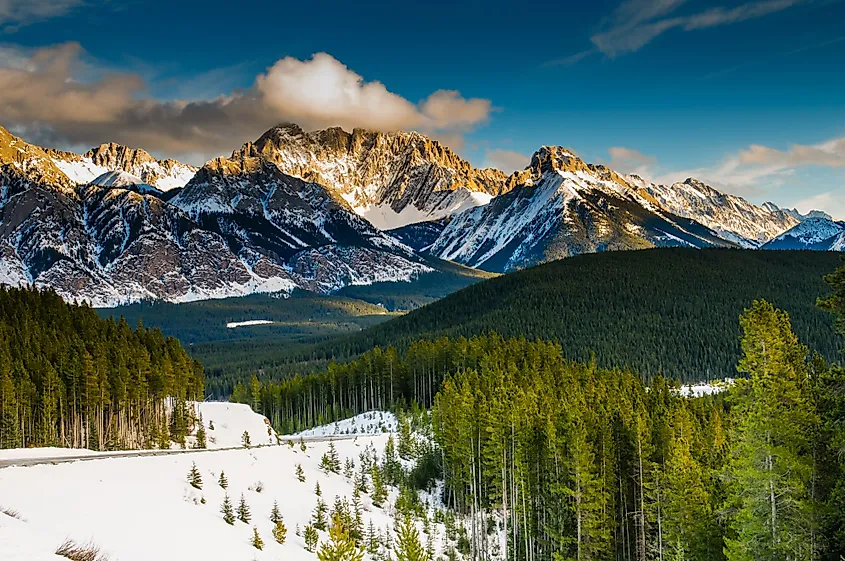
Two vertical zones be throughout much of the mountain range. The lower zone is characterized past a 'cool temperate' climate with relatively common cold winters and cool summers. The higher zone is characterized past a tundra-similar climate with severe winters and curt and cold summers. The precipitation increases from south to north, where the northern parts receive about thrice the amount of precipitation than that of the south. The major corporeality of precipitation in the south is received as snowfall during winters while local, afternoon thunderstorms are common during the summers.
Environmental
The plant communities of the Rocky Mountains vary greatly co-ordinate to elevations. The lower elevations are characterized by cottonwoods and other broadleaved deciduous species. The middle elevations are characterized by various trees like aspen, Douglas fir, pinon pino, etc. The subalpine forests are characterized by Engelmann bandbox, western scarlet cedar, western hemlock, white bandbox, and lodgepole pino. An array of wildflowers similar bunchberry, Indian paintbrush, columbine, larkspur, etc. are likewise plant on the mountainous terrain. The tree-line elevation of the Rocky Mountains varies from iii,700m in New Mexico to near 760m at the northern extremity of the Rocky Mountains. Alpine tundra that is characterized by depression flowering plants is found in the regions above the tree-line.
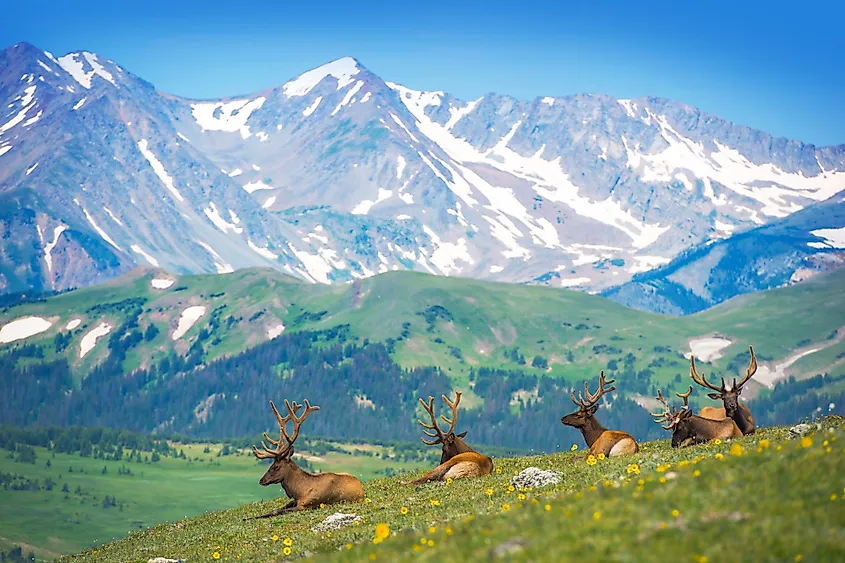
Some of the notable faunal species that are institute in the Rocky Mountains include white-tailed deer, mount goats, bighorn sheep, elk, moose, grizzly bears, black bears, lynxes, cougars, prairie dogs, squirrels, pika, marmots, beavers, etc. Some of the avian species that have been recorded in the Rocky Mountains include bald eagle, great horned owl, Canadian geese, turkey vulture, peregrine falcon, etc.
Brief History
Archaeological evidences have revealed that humans started to live in the Rockies between x,000 and 8,000 BCE. The Rocky Mountain area was inhabited by members of various indigenous tribes like the Apache, Shoshone, Cheyenne, Crow Nation, Nez Percé, Blackfoot, Shuswap, Sekani, Kutenai, and others. All these tribes left their indelible marks on the Rockies with their distinctive cultures, artworks, etc. These Paleo-Indians likewise hunted the ancient bison and mammoths in the valleys and foothills of the Rocky Mountains. In 1793, Sir Alexander Mackenzie became the get-go European explorer to cross the Rockies. In due class, a series of explorations were carried out past the Anglo-Americans and the discovery of fur and precious minerals led to the start of the economical exploitation of the Rocky Mountains. In 1872, the world's first national park - Yellowstone National Park was established past the US Congress. After, several national parks and forest reserves were established to protect the mountainous landscape of the Rocky Mountains.
Source: https://www.worldatlas.com/mountains/rocky-mountains.html
Posted by: scullfliket61.blogspot.com
0 Response to "How Many Large Watersheds Make Up Vermont How Many Large Watersheds Makeup Vermont"
Post a Comment